Organizations rely heavily on data to understand performance.
Metrics track activity. Reports summarize results. Dashboards highlight customer experience trends.
From a leadership perspective, this creates a sense of visibility.
But customer experience data doesn’t always reflect reality.
What Customer Experience Data Suggests
At a high level, performance often appears consistent.
Processes are followed. Standards are met. Targets are achieved.
Based on the reporting, everything appears to be functioning as intended.
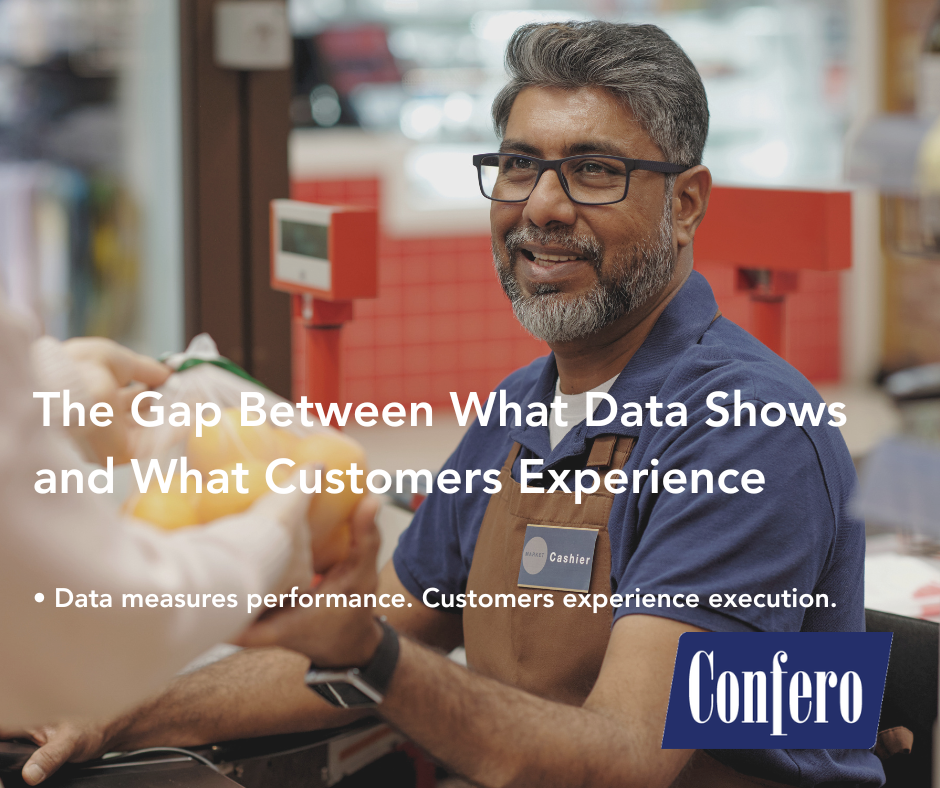
But data measures completion.
Customers experience execution.
What Customers Actually Experience
Customers experience the operational reality behind the numbers.
They notice:
• variations in service
• differences in execution
• inconsistent interactions across locations or teams
• changes in responsiveness depending on staffing, timing, or workload
These differences are often subtle—but meaningful.
And customers notice them long before leadership sees them in reporting.
Why the Gap Forms
The gap between data and experience exists because data captures outcomes—not interactions.
It can show:
✔ what was completed
✔ what was recorded
✔ whether required steps occurred
But it often fails to show:
👉 how the interaction unfolded
👉 how the customer perceived it
👉 whether the experience aligned with brand expectations
This creates a dangerous assumption:
If the metrics appear healthy, the experience must also be healthy.
That is not always true.
The Visibility Problem
In many organizations, customer experience data becomes fragmented.
Information exists across:
• surveys
• dashboards
• operational systems
• location-level reporting
But fragmented visibility delays action.
Issues may technically exist in the data without reaching the people who can address them in time to matter.
Data does not improve customer experience on its own.
Organizations improve when insight reaches the right people quickly enough to support action.
Why Validation Matters
To close the gap between reporting and reality, organizations need visibility into real-world interactions.
Objective human feedback provides context that systems alone often miss.
It reveals:
• how processes are actually carried out
• how employees adapt under real conditions
• where execution begins to drift from expectations
• how customers truly experience interactions in the moment
This is where operational visibility becomes critical.
Why This Matters
When organizations rely solely on performance metrics without validating real-world execution:
• inconsistencies persist
• operational drift expands over time
• customer frustration grows quietly
• leadership responds later than they should
By the time trends appear clearly in reporting, customers may already be adjusting their behavior or exploring alternatives.
Final Thought
Data is essential.
But data without operational visibility creates blind spots.
Organizations that succeed are not simply collecting more information. They are combining reporting with real-world validation to better understand how customer experience is actually being delivered.
Because performance is not defined solely by what was completed.
It is defined by how consistently expectations are experienced by customers.
👉 Learn more about understanding real-world customer experience across locations and teams:
Retail & Grocery